Elcho Island Arts and Crafts
Elcho Island is located in the Arafura Sea, approximately 550kms east of Darwin. The nearest mainland town is Nhulunbuy/Gove, a 45 minute flight by small plane to the south east of the Island. The Island is home to the largest Aboriginal community in north east Arnhem Land with approximately 2000 residents living in the main settlement of Galiwin’ku and across many outstations including Matamata, Ingliss Island, Maparru and Gariyak.

The Art Centre at Elcho Island is located on a cliff top (the eagle’s nest in Yolngu mythology) south east of the Galiwin’ku town centre and enjoys spectacular views looking south west over Mission Beach, Abbott Island and the surrounding sea.
Housed in what was originally the Galiwin’ku Hospital and owned by the local Galiwin’ku Community Council, the Centre employs both Indigenous and non-Indigenous staff and supports, represents and promotes more than 200 artists. Elcho Island Art and Craft has been community managed since 1992. It is an enormously important resource, playing a pivotal role in helping maintain pride in and connection to Yolngu culture across generations and in ensuring that time honoured traditions continue.
Art Styles
Yolngu Art is a reflection of the past and allows the individual to find and maintain a connection with the guiding presence of the spirit that represents the past, present and future. Each art work is based upon inherited designs which originate with ancestral beings who created the land. Paintings, wood carvings, morning stars and weavings, however, not only symbolize the interior, sacred domain, but also exist directly as a person, spirit, place, colour, song, dance, ceremony, season, experience, thought, plant, animal, or sea creature – and the relationship connecting all these.
Painting
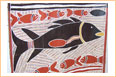
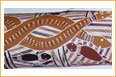
Yolngu art is based upon inherited designs passed down though the generations by ancestral beings 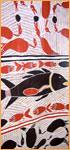 who created the land and initiated the traditional ceremonies which inform the culture. Paintings are done on bark, paper and canvas and in combination with song, dance and sculpture are essential to the initiation of young people, to establishing new relationships and connections between people and the land, or to guiding a dead person’s soul to its ancestral place. While there is great variation in design between the works, depending on the artist's moiety (Yirritja /Dhuwa) and clan, designs overall evoke the power of the ancestors through the telling of stories that relate to mythic events. In this way paintings represent the energy of the land and become an embodiment of the people. Natural pigments (ochres) accessed on the Island are still extensively used in paintings, although acrylics are being increasingly used by artists.
Hollow Logs
The bone coffin (hollow log) or Dupan is used in the burying the deceased. Following Yolngu tradition, the deceased is buried until the time is right (about one year). Thereafter the bones are dug up and crushed or broken to ensure that the spirit of the deceased can do no harm to or come after a living person. The bones are then wrapped in paper bark, pushed into the hollow log and either left in the bush to decay or burnt. The bones of more than one person (from the same family or clan) may be placed in one bone coffin.
Sculpture
Carvings are most often made from locally collected ‘Milkwood’ which is a light, easy to carve medium. Animal totems, birds and Mokuy or Spirit man figures are the most commonly used imagery for these works. Didgeridoos (Yidaki) are also produced here and are much sought after by buyers.
Morning Star
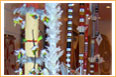
Elcho Island is perhaps best known for its Banumbirr or Morning Star poles. These unique and distinctive forms are linked to traditional Creation belief and play an important role in ceremonies, especially burials. There are many variations in Morning Stars and in the stories that link them. However, while they function on many levels of meaning and significance, they share a core narrative, essentially linking with the creation stories of the Djang’kau Sisters, ‘mothers’ of the Dhuwa moiety. They are important in making a connection between clans and importantly between the living and dead. Ultimately, the Morning Star is the resting place for Dhuwa souls.
Fibre Art
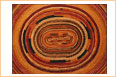
Fibre Art is a very important aspect of the art of Elcho Island. Processes used are little changed from ancient traditional techniques. Women collect the raw materials for their work from the bushlands and beaches on Galiwin’ku and surrounding homelands, later treating and dyeing the grasses to make bush string, stunningly beautiful baskets, jewellery, dilly bags, mats and fishing nets.
Jewellery
The processes associated with the making of contemporary jewellery is grounded in traditional practice. The collection of shells and seeds, though incredibly time consuming, becomes a sharing time and an opportunity for traditional processes to be passed from one generation to another. Similarly the preparation of the materials - cleaning, removing shellfish, drilling holes - is an activity which involves many people.
More contemporary techniques for threading and clasping are being developed with the assistance of trained artisans from other parts of Australia. The aim is that these beautifully varied and colourful pieces will maintain the integrity of traditional processes and natural materials while developing greater commercial viability.
Images and copy courtesy of Elcho Island Arts and Crafts www.elchoarts.com



 Read more